Camera Angles That Shape Perceived Credibility in Digital Reward Submission Guides
Written by Greta Koch · May 28, 2026
Camera Angles That Shape Perceived Credibility in Digital Reward Submission Guides
Digital reward submission guides rely on visual framing to establish authority, and camera angles play a central role in how audiences interpret the reliability of instructions for claiming prizes or entering contests. Research from communication studies shows that slight shifts in vertical positioning alter viewer perceptions of expertise within seconds of playback. Observers note that guides filmed from consistent eye level tend to align with higher completion rates in online reward platforms, while angled shots introduce measurable differences in trust signals across multiple platforms.
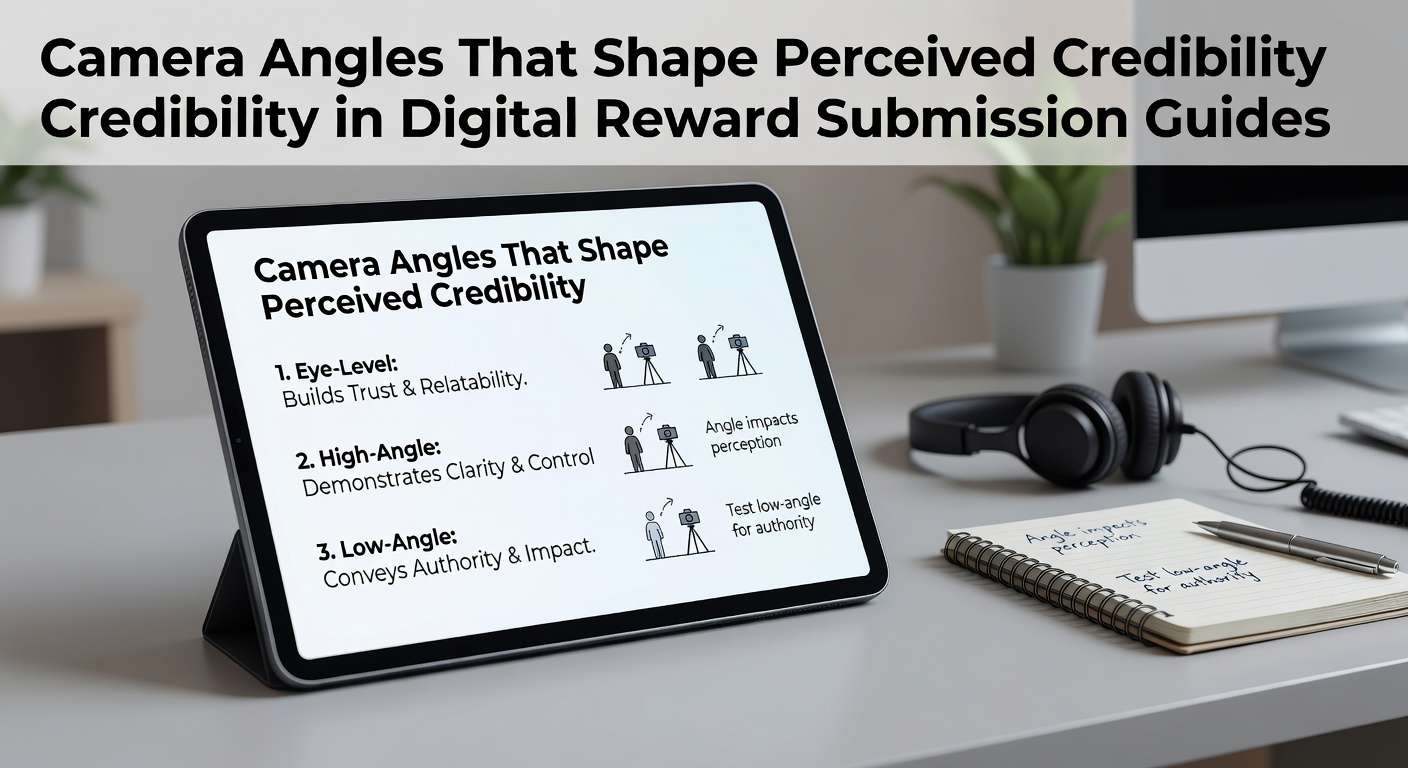
Eye-Level Framing and Authority Building
Eye-level shots place the camera at the presenter's natural height, creating a direct connection that data from video analytics platforms associates with stronger retention of step-by-step instructions. This positioning avoids any implication of dominance or submission, allowing the content to focus on procedural clarity rather than power dynamics. Figures from consumer behavior reports indicate that guides using this angle see sustained viewer attention through the full duration of submission processes, particularly when demonstrating form uploads or verification steps. Multiple organizations tracking digital engagement patterns have documented how eye-level framing reduces visual distractions and keeps emphasis on the guide's factual elements.
High Angles and Their Impact on Perceived Expertise
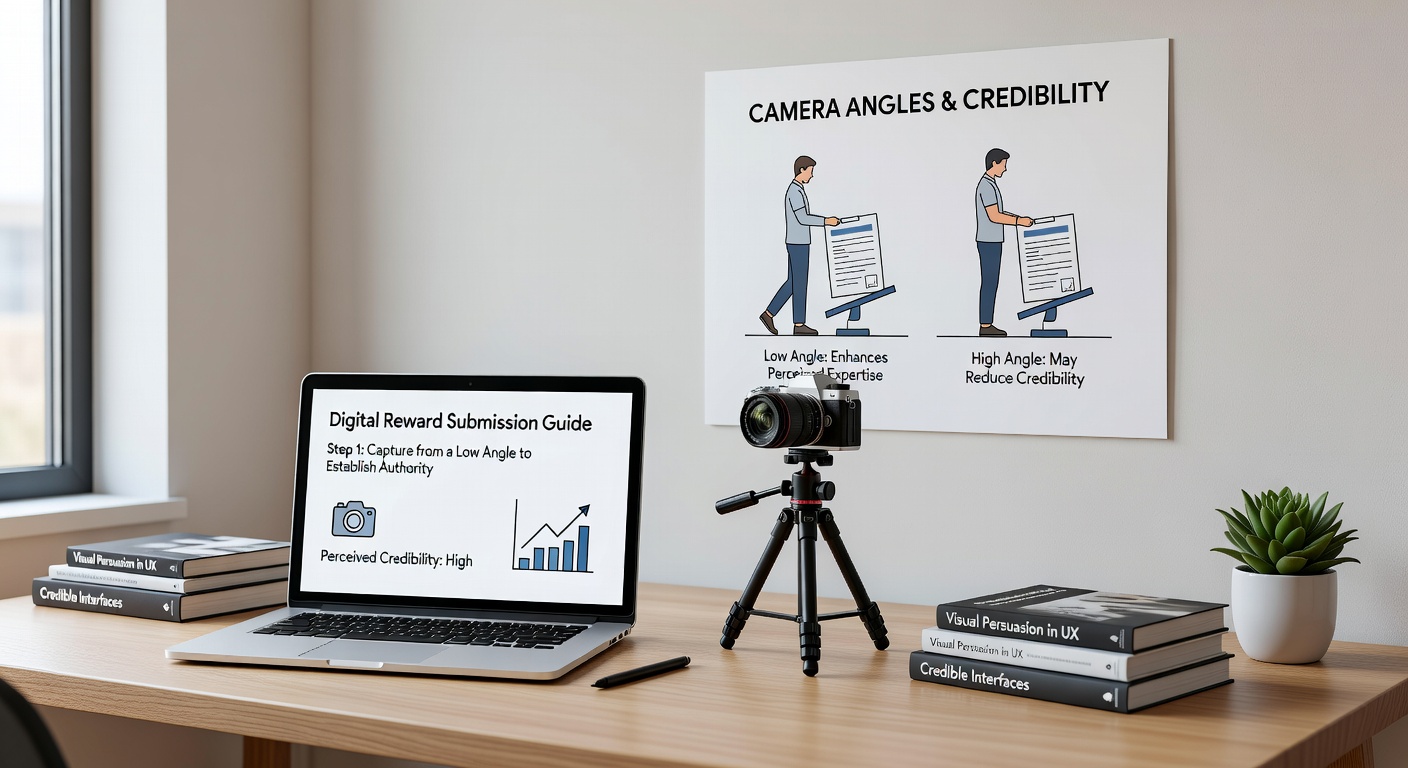
High-angle shots position the camera above the subject, producing a visual effect where the presenter appears smaller within the frame. Studies conducted by academic researchers at institutions in Canada have linked this technique to decreased perceptions of competence in instructional videos, including those covering reward claim procedures. The downward perspective can inadvertently suggest that the information carries less weight, leading some viewers to question the accuracy of details like eligibility criteria or deadline protocols. When reward submission guides incorporate high angles during critical segments, such as identity verification walkthroughs, engagement metrics often show quicker drop-offs compared to sequences maintained at eye level.
Low Angles and Authority Projection
Low-angle compositions elevate the subject within the frame, which researchers have connected to heightened impressions of control and knowledge in digital content. This approach works effectively in reward submission contexts when explaining complex rules around prize distribution timelines, yet overuse can create an unbalanced dynamic that some audiences interpret as overly assertive. Data collected through platform-wide viewing statistics reveals that selective application of low angles during opening explanations correlates with improved initial credibility ratings, while sustained use throughout an entire guide sometimes produces the opposite effect. Industry reports from European trade groups emphasize the value of combining low angles with neutral background elements to maintain focus on procedural accuracy rather than stylistic emphasis.
Lighting conditions interact directly with angle choices, since shadows cast from above or below modify how seriously viewers treat the presented information. Guides recorded in May 2026 under updated digital content standards increasingly incorporate angle adjustments based on these interactions to meet emerging transparency requirements set by regulatory bodies in Australia and the United States.
Side Angles and Contextual Depth
Side-angle placements introduce spatial context that can strengthen or weaken perceived credibility depending on how they integrate with the guide's core message. When the camera sits at a moderate offset, viewers gain visibility of both the presenter and surrounding elements such as reference materials or device screens used for submissions. Research papers published by university teams in the European Union have demonstrated that these angles support better comprehension of multi-step processes, including those involving multiple forms or confirmation screens. Yet extreme side angles that obscure direct eye contact often reduce the sense of personal accountability that audiences associate with trustworthy instructions.
Technical Adjustments Across Different Platforms
Platform-specific requirements influence angle selection in reward submission guides, as vertical formats common on mobile-first services demand tighter framing than horizontal desktop versions. Observers tracking content performance across regions report that guides optimized for each format maintain higher credibility scores when angles remain consistent within each version. Adjustments made mid-production, such as shifting from eye level to slight low angles for emphasis on key rules, require careful calibration to avoid abrupt visual transitions that disrupt viewer focus. According to data compiled by gaming industry associations operating across North America, these calibrated shifts contribute to smoother navigation through submission sequences without introducing unintended skepticism.
Patterns Observed in Recent Content Analysis
Analysis of reward submission guides released through early 2026 shows recurring correlations between angle variety and audience completion behaviors. Content creators who limit angle changes to purposeful moments, rather than frequent shifts for visual variety, achieve stronger alignment with viewer expectations around reliability. Those who've examined large datasets note that steady eye-level segments interspersed with brief low-angle highlights tend to outperform uniform approaches across demographic groups. Regulatory updates anticipated in several jurisdictions continue to reference visual consistency as one factor in evaluating promotional material integrity.
Conclusion
Camera angles function as structural elements that directly influence how digital reward submission guides convey credibility to their audiences. Patterns documented across multiple studies and performance datasets confirm that deliberate choices in framing affect viewer interpretations of procedural accuracy and source reliability. As platforms evolve and content standards advance through 2026, angle selection remains a measurable component in the broader framework of effective instructional video design for reward-based systems.