Mapping Time Zone Offsets to Peak Submission Windows in Worldwide Digital Reward Events and Their Effects on Overall Participation Clusters
Written by Wendy Long · Jul 16, 2026
Mapping Time Zone Offsets to Peak Submission Windows in Worldwide Digital Reward Events and Their Effects on Overall Participation Clusters
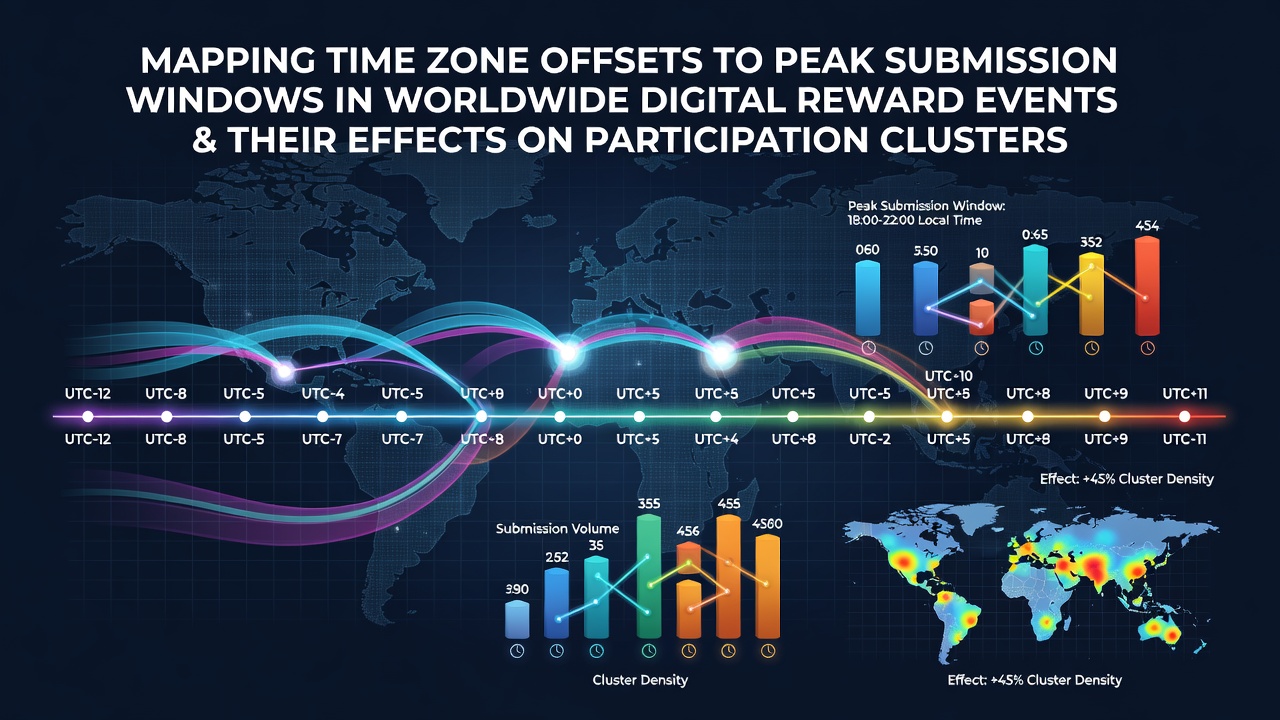
Digital reward events operate across multiple continents where participants submit entries through online portals, and time zone differences create distinct windows for peak activity that researchers track through server logs and geographic data, while the resulting participation clusters form around regions with aligned submission hours. Observers note that these patterns emerge because users tend to engage during evening or early morning hours in their local time, which shifts when mapped against a universal clock such as Coordinated Universal Time.
Time Zone Offsets and Submission Timing
Time zone offsets range from UTC-12 to UTC+14, and when reward platforms record entry timestamps they reveal concentrated bursts in specific ranges, for instance submissions from East Asia often peak between 20:00 and 23:00 local time which corresponds to earlier UTC hours compared with activity from the Americas. Data from multiple events shows that offsets of four to eight hours produce the clearest separation between clusters, because participants in those zones rarely overlap with each other during their preferred activity periods.
Researchers have examined logs from global platforms and found that a six-hour offset between two major regions can split daily submissions into two distinct waves separated by several hours, whereas smaller offsets of one or two hours produce merged activity that appears as a single prolonged peak. This mapping process relies on converting all timestamps to a common reference and then grouping them by regional clusters identified through IP addresses or user profiles.
Peak Windows Across Regions
Peak submission windows typically last between ninety minutes and three hours, and analysts identify them by measuring entry volume per fifteen-minute interval across a twenty-four-hour cycle. In one documented series of contests running through 2025, North American participants generated the highest volume between 19:00 and 22:00 Eastern Time, while European entries concentrated between 18:00 and 21:00 Central European Time, creating an offset-driven gap that platforms use to schedule maintenance or promotional pushes.
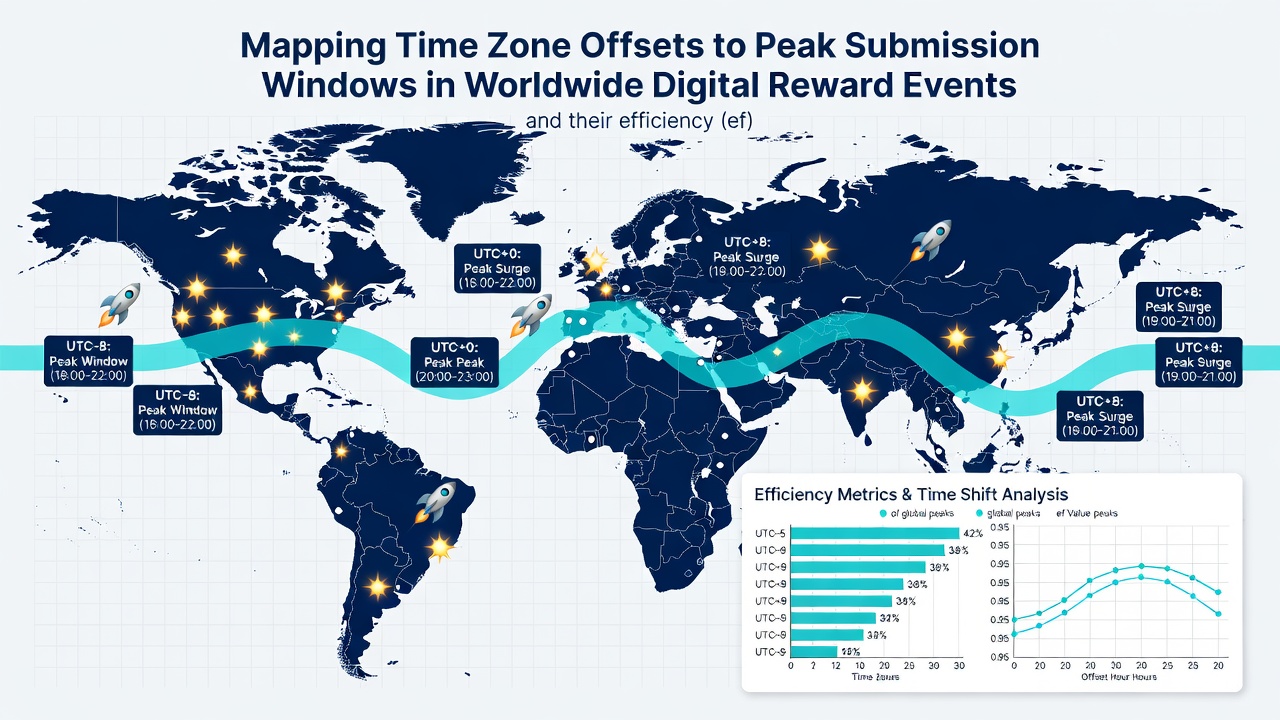
Australian participants, according to figures released by the Australian Bureau of Statistics in coordination with digital engagement studies, show their strongest window between 20:00 and 23:00 Australian Eastern Standard Time, which aligns with late evening in the southern hemisphere summer and produces minimal overlap with Asian clusters during the same UTC period. These windows shift slightly during daylight saving transitions, yet the core offset relationships remain stable enough for predictive modeling.
Impact on Participation Clusters
Participation clusters form when multiple users from the same or adjacent time zones submit within overlapping windows, and evidence from event analytics indicates that clusters exceeding five thousand entries per hour correlate with higher completion rates for multi-step reward tasks. Clusters separated by large offsets operate independently, which allows organizers to allocate server resources more precisely and reduces latency complaints during simultaneous high-volume periods.
Studies conducted at institutions such as the University of British Columbia have tracked how offset mapping influences cluster size over repeated events, revealing that regions with a twelve-hour offset from the primary organizer timezone develop self-contained clusters that grow steadily across campaign cycles without direct competition from other zones. The same research shows that clusters in mid-range offsets experience occasional merging when global events extend across multiple days, leading to broader but less dense participation patterns.
During July 2026 several international reward platforms plan synchronized campaigns that will test these mappings at scale, with preliminary projections suggesting that East Asian and South American clusters will maintain separation while North American and European groups experience partial overlap on weekends. Organizers use this information to adjust notification timing so that each cluster receives alerts at the start of its local peak window rather than a single global blast.
Analytical Approaches and Data Sources
Analysts apply clustering algorithms to timestamp datasets after converting them to UTC, then overlay geographic boundaries to confirm that observed peaks correspond to actual time zone groupings rather than random fluctuations. Validation often involves cross-referencing with publicly available time zone databases and regional internet usage statistics, which helps isolate the effect of offsets from other variables such as weekend versus weekday behavior.
Statistics Canada has published aggregated engagement metrics that support offset-based segmentation, showing measurable differences in submission density between Pacific and Atlantic time zones within the same national event. These datasets enable more accurate forecasting of cluster behavior when new reward programs launch across additional territories.
Conclusion
Mapping time zone offsets to submission windows provides a factual framework for understanding how worldwide digital reward events generate distinct participation clusters, and continued collection of timestamp and geographic data will refine these models as more events occur in 2026 and beyond. The approach relies on verifiable logs and established time standards rather than assumptions about user behavior, which keeps the analysis grounded in measurable patterns across regions.