Notification Cadence Patterns Across Digital Incentive Campaigns and Links to Long-Term User Retention Rates
Written by Yara Richter · Jul 13, 2026
Notification Cadence Patterns Across Digital Incentive Campaigns and Links to Long-Term User Retention Rates
Digital incentive campaigns rely on structured notification sequences to maintain user engagement, and researchers have tracked how the timing and frequency of these messages connect to sustained participation over extended periods. Patterns emerge when campaigns send alerts daily versus spacing them across several days or weeks, and data from multiple platforms shows measurable differences in how long users continue to interact with reward systems. Companies deploy these incentives through apps and email systems to encourage repeat actions such as completing tasks or making purchases, while the cadence determines whether users respond positively or begin to disengage.
Common Cadence Structures in Incentive Programs
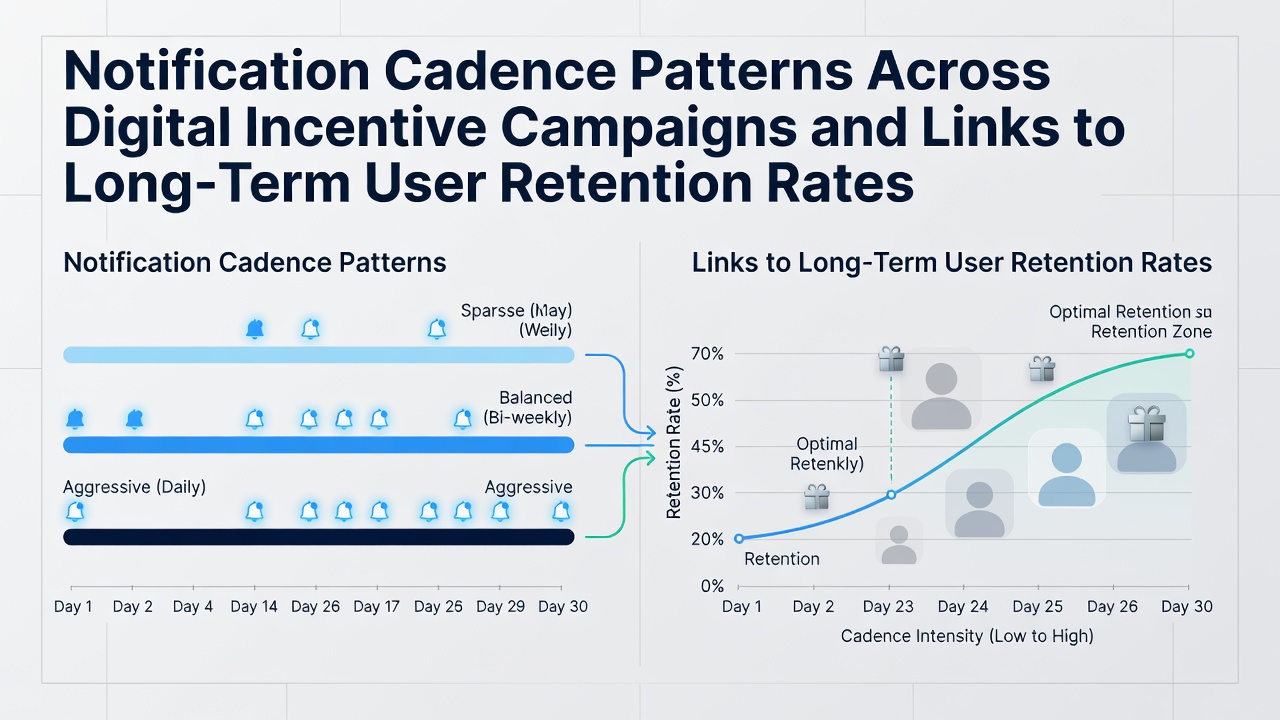
Campaigns typically follow one of several established rhythms, including high-frequency bursts that deliver messages several times per week or lower-frequency approaches that limit contact to once every ten to fourteen days. Studies conducted by academic teams have catalogued these structures across thousands of user accounts, revealing that consistent intervals often produce steadier response rates compared with irregular spikes. Observers note that some programs adjust cadence based on user behavior signals, such as reducing messages after a period of inactivity, and this adaptive method appears in records from large-scale loyalty platforms operating in North America and Europe.
Another pattern involves clustering notifications around specific events like milestone achievements or seasonal promotions, and figures from industry reports indicate these event-driven sequences can lift short-term activity while their effect on multi-month retention varies depending on follow-up spacing. Data collected through 2025 and into July 2026 demonstrates that programs maintaining a predictable weekly rhythm retain higher percentages of participants beyond the initial ninety days than those using daily or bi-weekly extremes.
Measured Connections to Retention Metrics
Long-term retention rates serve as a key performance indicator, and analysts have correlated notification frequency with the percentage of users who remain active after six months or more. One dataset compiled from consumer-facing applications found that moderate cadences, defined as two to three targeted messages per week, aligned with retention figures approximately fifteen percent higher than daily notification groups. Researchers at institutions tracking digital marketing trends have published these associations, noting that excessive volume tends to correlate with higher opt-out rates after the first quarter of engagement.
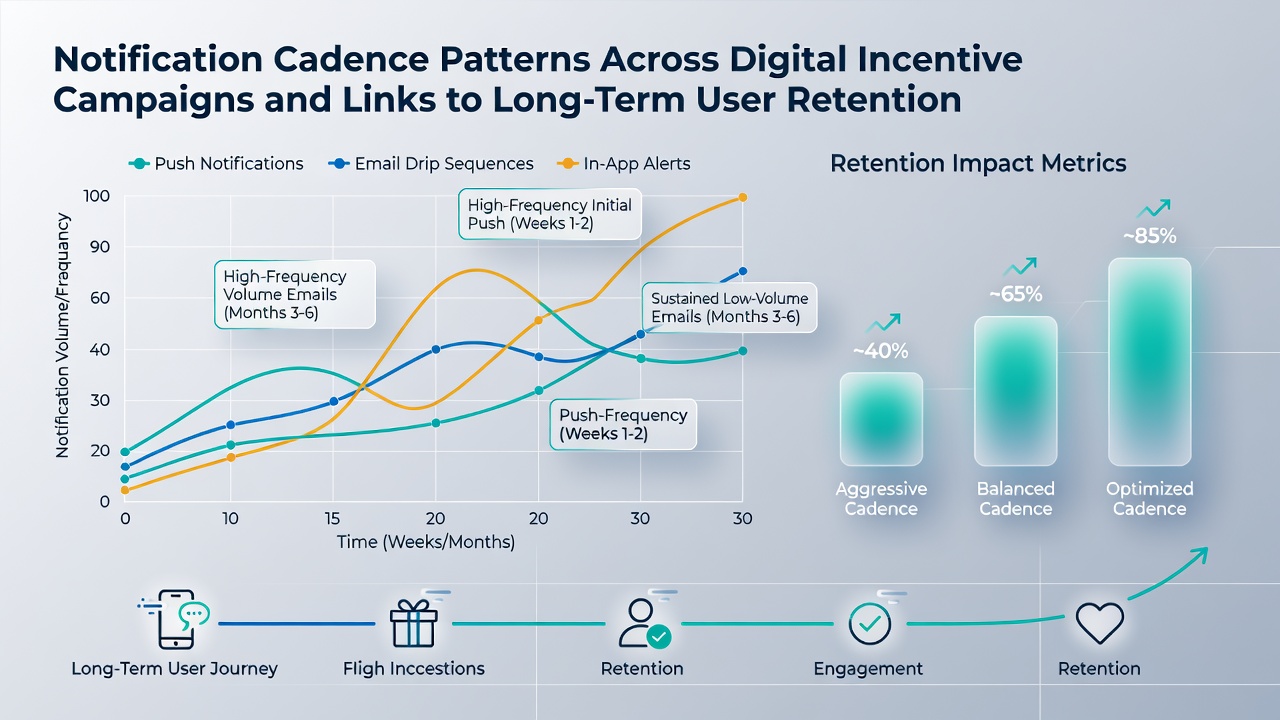
Yet retention also depends on message relevance, and campaigns that combine cadence control with personalized content show stronger outcomes in longitudinal studies. Evidence from regulatory monitoring bodies, such as those publishing consumer behavior summaries through the Australian Competition and Consumer Commission, highlights how transparent scheduling practices contribute to sustained trust and continued participation. Programs that announce their notification schedule upfront record lower complaint volumes and steadier user return rates over successive campaign cycles.
Regional Variations and Platform-Specific Observations
Retention patterns differ across geographic markets because user expectations around message volume vary, and reports from Canadian digital commerce agencies document slower opt-out curves in regions where weekly summaries replace frequent alerts. European platforms operating under data-protection frameworks similarly report that users respond more favorably to spaced notifications when campaigns provide clear control options. These regional differences surface in aggregated statistics released by trade organizations focused on mobile engagement, where analysts compare datasets spanning multiple countries and note consistent advantages for balanced cadences regardless of local regulations.
Platform type further influences outcomes, since push notifications on mobile devices produce different fatigue thresholds than email sequences, and experts tracking both channels have recorded higher long-term activity when campaigns limit combined daily contacts across all channels to under four. One analysis covering major retail and service apps revealed that users exposed to synchronized cadences across email and in-app alerts maintained activity levels that exceeded single-channel groups by noticeable margins after the first year.
Conclusion
Notification cadence patterns continue to shape how digital incentive campaigns perform over time, and the connections to retention rates appear consistently in data gathered from diverse platforms and regions. Observers tracking these metrics through mid-2026 emphasize the value of measured delivery schedules that avoid extremes, and the evidence points to measurable benefits when programs align frequency with user response signals. Continued monitoring by research institutions and regulatory bodies supplies the ongoing datasets needed to refine these approaches across evolving digital environments.