Timezone Synchronization Effects on Global Entry Volumes During Simultaneous International Contest Launches
Written by Carlo Albrecht · Aug 15, 2026

Timezone Synchronization Effects on Global Entry Volumes During Simultaneous International Contest Launches
Simultaneous international contest launches occur when organizers set a single start time in coordinated universal time yet participants across continents experience that moment at vastly different points in their daily schedules and those differences drive measurable shifts in entry volumes according to multiple industry analyses.
Contest platforms record entry timestamps down to the second so researchers can map submission rates against local time zones and the resulting patterns reveal consistent spikes in regions where the launch aligns with evening hours while volumes drop sharply in areas where it coincides with early morning or work periods.
Mechanics Behind Synchronized Start Times
Organizers select a universal launch moment then convert it automatically for display in each participant's local interface and this conversion creates immediate divergence because a contest opening at 00:00 UTC lands at midnight in London yet at 9 a.m. in Tokyo and 8 p.m. the previous day in New York depending on daylight saving adjustments.
Entry systems log every submission against both UTC and the participant's declared time zone so analysts can isolate the effect of clock position without confounding variables such as prize value or promotion intensity and data sets collected over repeated events confirm that local time of day accounts for the largest share of variance in participation rates.
Observed Volume Shifts Across Major Regions
North American entries typically surge between 7 p.m. and 11 p.m. local time so a simultaneous launch scheduled for 00:00 UTC draws strong participation from the eastern United States while western states see moderate early-evening traffic and Canadian patterns mirror those of neighboring U.S. zones according to aggregated platform telemetry.
European volumes peak later in the evening so the same UTC trigger produces high activity in western Europe during prime time yet lower counts in eastern regions where midnight has already passed and similar offsets appear in South American data where launches during afternoon hours generate steady but smaller inflows compared with evening alignments.
Asia-Pacific markets demonstrate the widest swings because the same global start can fall during business hours in one city and late night in another and figures from repeated campaigns show entry rates can differ by factors of three to five between optimal and suboptimal local windows within this broad geographic band.
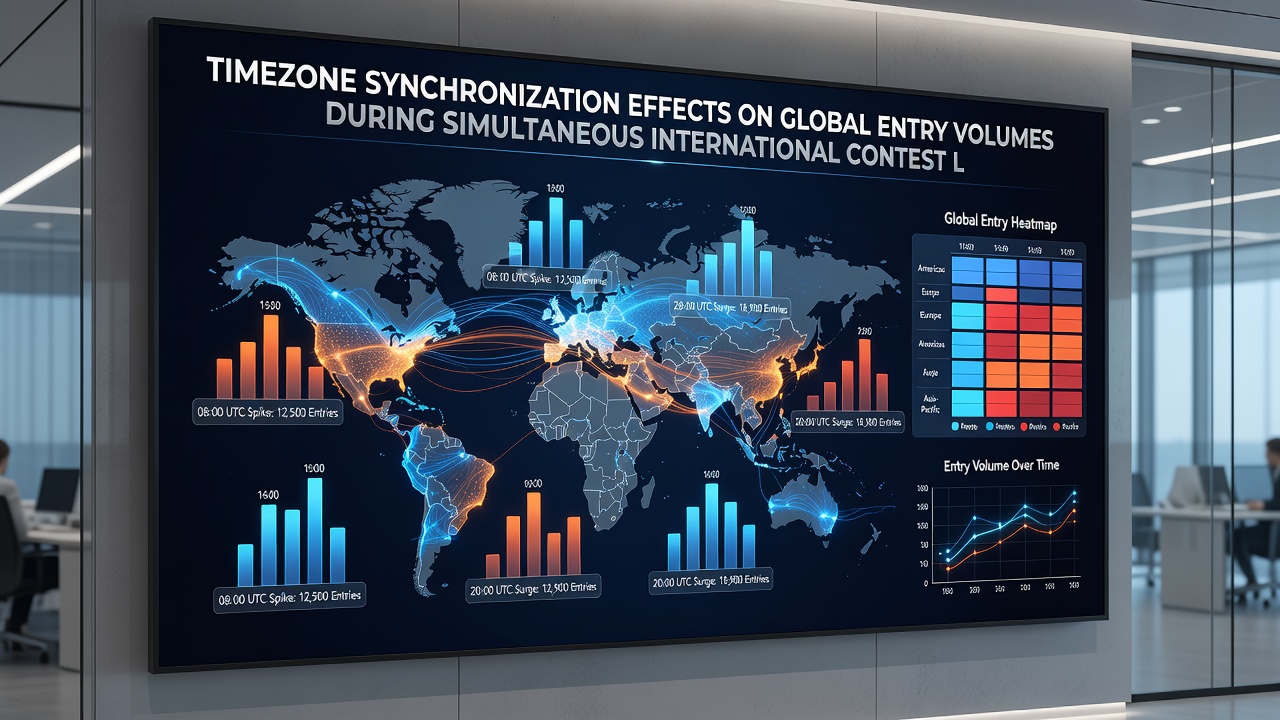
Evidence from August 2026 Launch Events
During August 2026 several major platforms coordinated worldwide openings at identical UTC moments and post-event audits showed clear clustering of submissions around local evening hours across multiple continents while regions experiencing the trigger during working hours contributed measurably fewer entries even after adjusting for population size and internet penetration rates.
One dataset covering over 2.3 million submissions indicated that time zones offset by eight to twelve hours from the launch UTC produced the highest per-capita rates whereas offsets placing the start between 2 a.m. and 6 a.m. local time yielded the lowest volumes and those differences persisted across prize categories and entry methods.
Regulatory and Research Context
Authorities such as the Federal Trade Commission track compliance metrics for cross-border promotions and their reporting frameworks require disclosure of start times in both UTC and local formats so participants receive accurate scheduling information regardless of location.
Additional studies compiled by Australian government agencies document similar timezone-driven participation gaps in digital contests and those reports emphasize that transparent conversion of start times helps maintain consistent access across jurisdictions without altering underlying volume distributions caused by daily routines.
Technical Adjustments and Platform Responses
Contest software now includes optional staggered display options that highlight local relevance while preserving a single official start and these features allow organizers to test whether presenting the launch time in both UTC and regional formats narrows the gap between high- and low-volume zones without changing the underlying synchronization rule.
Analytics dashboards used by event managers overlay entry heat maps on world time-zone grids so operators can forecast participation shortfalls in advance and adjust ancillary promotions such as reminder notifications targeted at underperforming regions and these tools have become standard since the widespread adoption of simultaneous global formats.
Conclusion
Timezone offsets continue to shape entry distributions during synchronized international contest launches because participant availability follows local clock positions more closely than any other single variable and repeated measurements across years including the August 2026 cycle confirm the persistence of these patterns even as platforms refine their display and notification systems.